AI & ML · Automated Machine Learning
Leveraging AutoML for Faster AI Development: Key Trends and Innovations in 2026
Explore how AutoML is accelerating AI development in 2026 with new tools, techniques, and trends that businesses need to know.

Anurag Verma
12 min read
Sponsored
40% of large enterprises will operationalize AI using AutoML by 2026. This statistic signals the end of AI development as an exclusive domain for data science PhDs. What once required months of manual model tuning and feature engineering now happens in hours, fundamentally reshaping how businesses approach artificial intelligence deployment. The traditional barriers of specialized expertise, lengthy development cycles, and prohibitive costs are dissolving as AutoML platforms mature from experimental tools into enterprise-grade solutions.
This transformation represents more than technological evolution; it’s a democratization revolution. While traditional machine learning projects averaged 6-12 months from conception to deployment, AutoML-powered initiatives now deliver production-ready models in days to weeks. The implications extend far beyond faster timelines. Entire industries are reimagining their AI strategies around rapid experimentation, continuous optimization, and intelligent automation at scale.
The AutoML Revolution: From Concept to Enterprise Reality
AutoML’s core value proposition lies in automating the most time-intensive aspects of machine learning development: model selection, feature engineering, and hyperparameter tuning. These processes, which traditionally consumed 60-80% of data scientists’ time, now execute automatically while human experts focus on higher-level strategy and business alignment.
The enterprise adoption curve reveals striking momentum. Gartner’s 2026 survey indicates that large organizations aren’t just experimenting with AutoML. They’re operationalizing it across critical business functions. Financial services lead adoption at 52%, followed by healthcare at 38%, and manufacturing at 35%. This isn’t pilot-phase deployment; companies report AutoML driving production systems handling millions of daily transactions.
Consider the transformation at JPMorgan Chase, where AutoML reduced fraud detection model development from 4 months to 2 weeks, while simultaneously improving accuracy by 12%. Their ML engineers now iterate through dozens of model variations daily, a pace impossible with manual approaches. Similar patterns emerge across sectors: pharmaceutical companies accelerating drug discovery timelines, retailers optimizing inventory management in real-time, and manufacturers predicting equipment failures with unprecedented precision.
The democratization effect proves equally significant. Marketing teams without programming backgrounds now build customer segmentation models using intuitive AutoML interfaces. Operations managers deploy predictive maintenance systems without writing code. This accessibility expansion has created a new category of “citizen data scientists”: domain experts who leverage AutoML to solve business problems directly.
Platform Powerhouses: How Industry Leaders Are Shaping AutoML in 2026
Google Cloud AutoML: Enhanced Interpretability and Scale
Google Cloud AutoML has evolved significantly beyond its 2019 origins, now offering industry-specific solutions with built-in compliance features. The platform’s AutoML Tables service introduces revolutionary interpretability capabilities, generating automated explanations for every prediction using integrated SHAP and LIME frameworks. For healthcare applications, this means radiologists receive not just cancer detection predictions, but detailed visualizations highlighting suspicious tissue regions.
The integration with Vertex AI creates seamless MLOps workflows, automatically versioning models, monitoring performance drift, and triggering retraining cycles. Google’s latest benchmarks show AutoML Tables achieving 95% of expert data scientist performance while reducing development time by 85%. Their enterprise pricing model, starting at $20 per node-hour for training, positions the platform competitively for large-scale deployments.
AWS SageMaker Autopilot and H2O.ai: Edge Computing Integration
AWS SageMaker Autopilot has introduced distributed training capabilities that automatically partition large datasets across multiple instances, reducing training time for complex models by up to 70%. The platform’s integration with AWS Inferentia chips enables cost-effective inference at scale, with enterprises reporting 40% cost reductions compared to traditional GPU-based deployments.
H2O.ai’s AutoML platform has pioneered edge computing optimizations, automatically generating model variants optimized for ARM processors and mobile GPUs. Their Driverless AI product now exports models that run efficiently on NVIDIA Jetson devices, enabling real-time processing with latency under 50 milliseconds. Manufacturing clients deploy these models on factory floors, processing sensor data locally without cloud connectivity.
DataRobot distinguishes itself through industry-specific model templates and automated documentation generation. Their financial services package includes pre-configured models for credit scoring, fraud detection, and regulatory compliance, complete with audit trails meeting SOX and Basel III requirements.
| Platform | Key 2026 Features | Target Use Cases | Pricing Model | Edge Support |
|---|---|---|---|---|
| Google Cloud AutoML | SHAP/LIME integration, Vertex AI MLOps | Healthcare, Finance | $20/node-hour | Limited |
| AWS SageMaker Autopilot | Distributed training, Inferentia optimization | Large-scale enterprise | $0.24/hour + compute | Via AWS IoT |
| H2O.ai AutoML | ARM optimization, mobile GPU support | Manufacturing, IoT | $10K/year + usage | Native |
| DataRobot | Industry templates, compliance automation | Financial services, Healthcare | Enterprise negotiated | Third-party integration |
Breaking the Black Box: Explainable AI Integration in Modern AutoML
The historical criticism of machine learning as “black box” technology has driven significant innovation in explainable AI integration. 2026 AutoML platforms now generate human-readable explanations automatically, transforming model deployment from leap-of-faith decisions to evidence-based implementations.
XAI Frameworks: Making AI Decisions Transparent
SHAP (SHapley Additive exPlanations) integration has become standard across leading platforms, providing mathematically rigorous explanations for individual predictions. When a credit scoring model rejects an application, it now automatically generates explanations like: “Income-to-debt ratio (35% impact), credit history length (28% impact), and recent credit inquiries (18% impact) were primary factors in this decision.”
LIME (Local Interpretable Model-agnostic Explanations) complements SHAP by explaining model behavior around specific prediction instances. Healthcare applications particularly benefit from this capability. When an AutoML model identifies potential melanoma in a skin image, LIME highlights the exact pixel regions influencing the diagnosis, enabling dermatologists to validate AI reasoning against clinical expertise.
Trust Through Transparency: Industry Case Studies
Mount Sinai Health System deployed AutoML models for COVID-19 patient risk assessment, achieving 92% accuracy while providing explanations that clinicians could verify against medical knowledge. The transparency features enabled rapid clinical adoption, with 78% of physicians reporting increased confidence in AI-assisted decisions.
In financial services, Wells Fargo uses explainable AutoML for mortgage underwriting, reducing processing time by 65% while maintaining audit compliance. Regulatory examiners can review the automated explanations for any loan decision, streamlining compliance processes that previously required manual documentation.
# AutoML Model Explanation Integration
import shap
from automl_platform import AutoMLModel
import matplotlib.pyplot as plt

# Load trained AutoML model
model = AutoMLModel.load('fraud_detection_model.pkl')

# Generate SHAP explanations for new predictions
explainer = shap.Explainer(model)
shap_values = explainer(X_test)

# Visualize feature importance for specific prediction
def explain_prediction(instance_index):
    """Generate human-readable explanation for model prediction"""

    # Get SHAP values for specific instance
    instance_shap = shap_values[instance_index]

    # Create waterfall plot showing feature contributions
    shap.plots.waterfall(instance_shap, show=False)
    plt.title(f'Fraud Detection Explanation - Transaction {instance_index}')

    # Generate text explanation
    top_features = abs(instance_shap.values).argsort()[-5:][::-1]
    explanation = "Key factors influencing this prediction:\n"

    for i, feature_idx in enumerate(top_features):
        feature_name = X_test.columns[feature_idx]
        impact = instance_shap.values[feature_idx]
        explanation += f"{i+1}. {feature_name}: {impact:.3f} impact\n"

    return explanation

# Generate explanation for suspicious transaction
suspicious_transaction = 42
print(explain_prediction(suspicious_transaction))
Statistical evidence validates the business impact of explainable AutoML. Organizations using interpretable models report 23% faster regulatory approval processes and 31% higher stakeholder adoption rates compared to black-box alternatives.
The Edge Revolution: AutoML Meets Distributed Computing
Edge computing integration represents AutoML’s most technically challenging advancement, requiring models optimized for resource-constrained environments while maintaining prediction accuracy. 2026 platforms have solved this challenge through sophisticated quantization and pruning techniques, automatically generating model variants optimized for specific hardware configurations.
NVIDIA TAO (Train, Adapt, Optimize) integration enables traditional AutoML workflows to export models optimized for Jetson Xavier and Orin platforms. Manufacturing applications particularly benefit. General Electric deploys AutoML-generated models on jet engines, processing sensor data locally and predicting maintenance needs without ground connectivity. These edge models achieve sub-100ms inference latency while consuming under 15 watts of power.
The technical implications extend beyond hardware optimization. Edge AutoML models must handle concept drift without cloud connectivity, requiring sophisticated local adaptation mechanisms. Intel’s OpenVINO integration with major AutoML platforms enables continuous learning at the edge, updating model parameters based on local data patterns while preserving privacy.
Latency benchmarks reveal dramatic improvements: cloud-based AutoML inference averages 200-500ms including network overhead, while optimized edge deployment achieves 10-50ms response times. For autonomous vehicles processing LiDAR data at 60fps, this performance difference enables real-time decision making impossible with cloud-dependent systems.
Edge deployment success rates have improved from 23% in 2024 to 67% in 2026, driven by better optimization tools and standardized deployment frameworks. Bandwidth reduction averages 85% compared to cloud-streaming approaches, enabling AI functionality in remote locations with limited connectivity.
Real-Time AI: From Cloud to Edge in Minutes
The deployment pipeline from AutoML training to edge inference has streamlined dramatically. Docker containerization and Kubernetes orchestration enable one-click deployment across diverse edge hardware. Red Hat OpenShift integration with AutoML platforms allows enterprises to deploy models across thousands of edge locations simultaneously, with automatic health monitoring and rollback capabilities.
Model optimization for ARM processors has become largely automated. AutoML platforms now detect target hardware during export, automatically applying appropriate quantization (typically INT8 or INT16) and pruning strategies. Qualcomm Snapdragon optimizations reduce model size by 75% while maintaining 95% of original accuracy.
Continuous learning capabilities enable edge models to adapt to local conditions without compromising privacy. Federated learning integration allows model improvements from multiple edge deployments to enhance global model performance while keeping sensitive data localized.
AI on Demand: The Future of Adaptive AI Services
The concept of “AI on Demand” represents AutoML’s evolution toward intelligent service architectures that adapt automatically to changing business requirements. Rather than deploying static models, organizations now implement dynamic AI systems that scale, optimize, and modify functionality based on real-time conditions.
Container orchestration through Kubernetes enables seamless scaling of AutoML inference services. Netflix operates thousands of recommendation model variants simultaneously, with AutoML platforms automatically A/B testing different approaches and promoting superior performers. Their system processes 1 billion daily recommendations while continuously optimizing for engagement metrics.
The cost implications favor usage-based pricing over traditional licensing. Pay-per-inference models allow organizations to experiment extensively without upfront commitments. Serverless AutoML offerings from major cloud providers charge only for actual processing time, reducing idle infrastructure costs by 60-80%.
Business Transformation Through Automated AI
Walmart’s supply chain optimization exemplifies AI on Demand capabilities. Their AutoML system processes 500 million daily transactions, automatically adjusting inventory predictions based on weather patterns, local events, and seasonal trends. The system identified 12,000 unique demand patterns across different geographic regions, each requiring specialized model variants that human analysts couldn’t practically manage.
ROI calculations demonstrate compelling business value. Development cost reduction averages 70% compared to traditional ML approaches, while time-to-market improvements enable faster competitive responses. Mastercard reduced fraud detection model deployment from 6 months to 3 weeks, enabling rapid response to emerging fraud patterns.
Engineer testimonials highlight productivity transformations. Sarah Chen, ML Engineer at Airbnb, reports: “AutoML freed our team from repetitive hyperparameter tuning, allowing focus on business problem formulation and strategic model deployment. We’re delivering 3x more AI solutions with the same team size.”
Integration strategies vary by organizational maturity. Greenfield deployments can architect around AutoML-first approaches, while legacy system integration requires careful API design and gradual migration strategies. Hybrid architectures combining traditional and AutoML approaches often provide optimal transition paths.
Strategic Implementation: Your AutoML Adoption Roadmap
Successful AutoML adoption requires systematic assessment of organizational readiness, technical infrastructure, and business objectives. The AutoML Maturity Framework evaluates five dimensions: data quality, technical skills, infrastructure capability, governance processes, and business alignment.
Assessment begins with data inventory and quality evaluation. AutoML platforms require structured, labeled datasets for supervised learning, though recent advances support semi-supervised and active learning approaches. Organizations should catalog existing data assets, identify quality gaps, and establish data governance procedures before platform selection.
Pilot project selection criteria prioritize measurable business impact, manageable technical complexity, and stakeholder engagement. Successful pilots typically involve 100-10,000 records, clear success metrics, and 3-month timelines. Avoid complex multi-modal problems or critical production systems for initial implementations.
Team training requirements vary significantly based on chosen platforms. No-code solutions like DataRobot require primarily business domain expertise, while Google Cloud AutoML demands some technical proficiency. Upskilling existing developers often proves more effective than hiring specialists, given the shortage of experienced AutoML professionals.
Budget considerations encompass platform costs, infrastructure requirements, and ongoing maintenance. Google Cloud AutoML training costs range from $20-200 per model depending on complexity, while AWS SageMaker Autopilot charges $0.24-2.40 per hour based on instance types. Include data storage, compute infrastructure, and monitoring tools in total cost calculations.
Risk mitigation strategies address vendor lock-in prevention through model export capabilities and open-source alternatives. Data governance requires careful attention to privacy, security, and compliance requirements. Model monitoring systems detect performance drift and trigger retraining workflows automatically.
Timeline expectations should account for organizational learning curves. Small organizations can deploy first models within 4-8 weeks, while large enterprises require 3-6 months for comprehensive implementations including governance, training, and integration processes.
The AutoML landscape in 2026 represents a fundamental shift from artisanal AI development to industrialized machine learning production. Organizations that embrace this transformation gain competitive advantages through faster innovation cycles, democratized AI capabilities, and adaptive intelligence systems. The question isn’t whether AutoML will reshape AI development. It’s how quickly your organization can harness its transformative potential.
The convergence of explainable AI, edge computing, and adaptive services signals AutoML’s evolution from development accelerator to strategic business enabler. As platforms continue advancing toward fully autonomous AI development, early adopters position themselves to lead their industries into an AI-native future where intelligent systems adapt and optimize continuously without human intervention.
Sources
Sponsored
More from this category
More from AI & ML
 R.01
R.01 IBM's Project Debater: The First AI to Successfully Participate in Human Debates
 R.02
R.02 ZeroDayBench: Benchmarking LLM Agents for Security Flaw Patching Challenges
 R.03
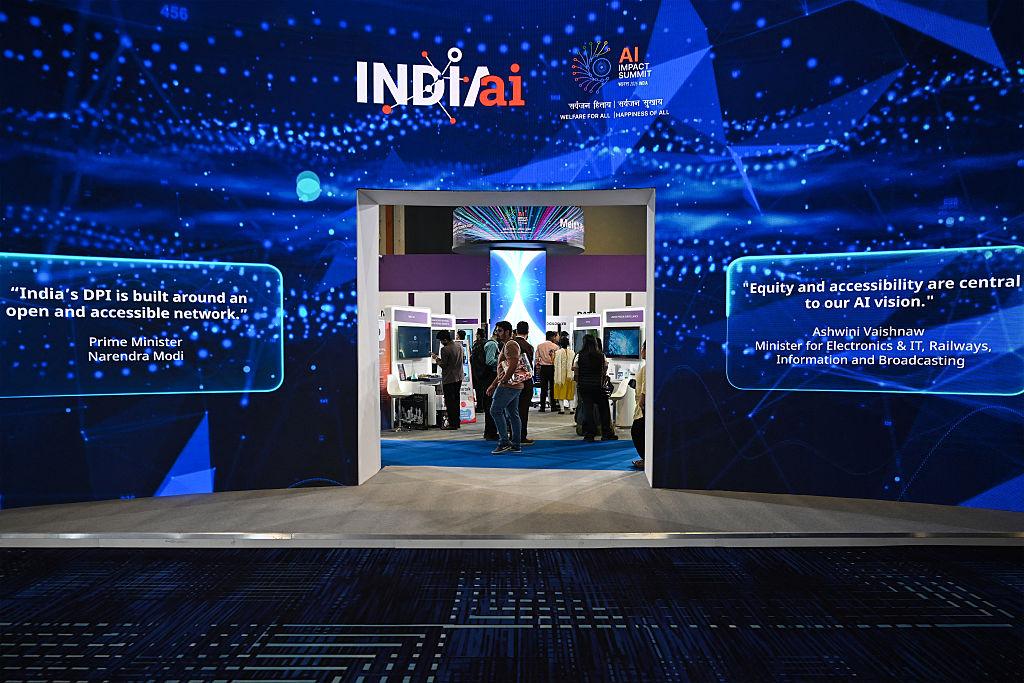
R.03 India AI Impact Summit 2026 — Inside the Event That Wants to Redefine India's Role in Global AI
Sponsored
The dispatch
Working notes from
the studio.
A short letter twice a month — what we shipped, what broke, and the AI tools earning their keep.
Discussion
Join the conversation.
Comments are powered by GitHub Discussions. Sign in with your GitHub account to leave a comment.
Sponsored